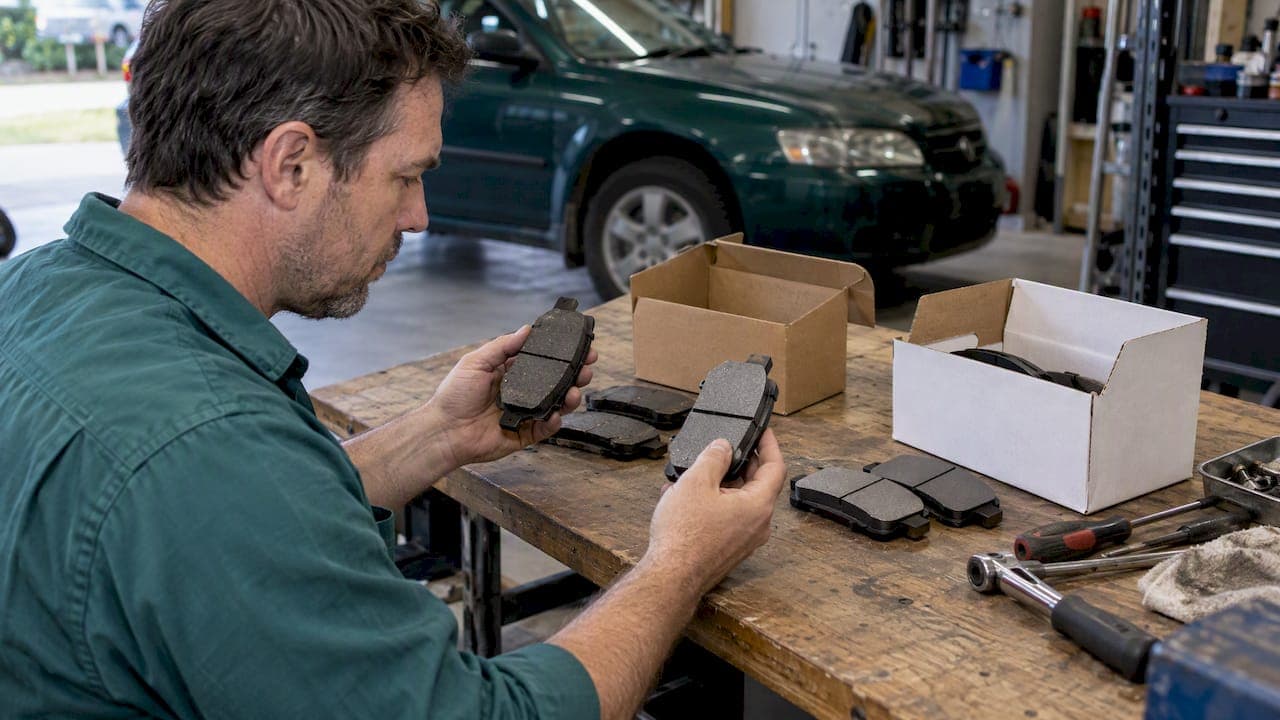
For most jobs on most cars, a good aftermarket part from a reputable brand does the work of the OEM part for less money. The exceptions are safety-critical parts, some electronics and anything a warranty or insurer specifically covers. The real skill is knowing which bucket your job falls into, and that is what this guide helps you work out.
The terms are muddier than they look. "Genuine", "OEM" and "aftermarket" get used loosely at parts counters, and the price gap between them can be large. Below we explain what each label means, what the research says about cost and quality, what Australian law says about warranty, and a simple way to choose part by part.
TL;DR
- OEM parts are made by or for your car's manufacturer. Aftermarket parts are made by other companies. Quality in the aftermarket ranges from excellent to poor, so the brand matters more than the label.
- OEM parts typically cost 20% to 60% more than comparable aftermarket options, according to US industry data. Australian prices vary by make and part, so check your own job.
- Under Australian Consumer Law, you do not need genuine parts or a dealer service to keep your new car warranty, as long as the work is done properly.
- Spend more on safety-critical parts (airbags, seatbelts, structural parts) and be choosy on brakes. Save on filters, wipers, batteries, bulbs and most service items.
Table of Contents
- What the labels actually mean
- How much more do OEM parts cost?
- Is aftermarket as good as OEM?
- Will aftermarket parts void my warranty in Australia?
- Which parts are worth paying extra for?
- How to tell what you are looking at
- Our view on choosing parts
- Plan the whole job, not just the part
- A simple decision checklist
- FAQ
- Sources
What the labels actually mean
Genuine parts come in the car maker's own box and are sold mainly through dealerships. OEM (original equipment manufacturer) parts are, in the words of one parts retailer's guide, made by the company that built your car or by a manufacturer it contracted. In practice the part inside a genuine box and the part inside an OEM supplier's box can be the same item made on the same line.
Aftermarket parts are replacement components not made by the original equipment manufacturer. Some are built to match the original. Others are designed to do something different, such as a performance clutch or upgraded brake pads.
The Australian Automotive Aftermarket Association (AAAA), which represents the independent industry, argues that the line between "genuine" and "aftermarket" is often a marketing distinction. Many independent manufacturers supply original parts to car makers, so the main difference can be the packaging and the price. That is the association's view, and it has an interest in the answer, but it matches what mechanics commonly tell customers: the factory supplier name on the part matters more than the box.
A quick reference:
| Type | Who makes it | Typical outlet | Price | Quality |
|---|---|---|---|---|
| Genuine | Car maker or its supplier, car maker's branding | Dealership | Highest | Consistent, matches the original |
| OEM (supplier-branded) | The company that supplies the car maker | Parts stores, some workshops | Often lower than genuine | Same as original when it is the true factory supplier |
| Quality aftermarket | Independent brands | Parts stores, online, workshops | Lower | Can meet or exceed the original spec |
| Budget aftermarket | Varies, often unbranded | Online marketplaces | Lowest | Highly variable |
| Recycled OEM | Salvaged from other vehicles | Dismantlers, insurers | Low to mid | Original quality, with wear |
The last row matters in insurance repairs. Under the insurer parts guidelines, recycled OEM parts from deregistered or written-off vehicles count as genuine parts. They keep the original material and design, though they carry the age of the donor car.
How much more do OEM parts cost?
The published figures are broad. One US shopping guide reports that aftermarket parts can often be found for 20% to 50% less than OEM, while an insurers' body quoted there puts OEM at up to 60% higher. Treat those as a rough range, not an Australian price list.
Why the gap exists:
- Brand premium. You pay for the badge and the box.
- Dealer margins. Dealerships mark parts up, and they carry the cost of stocking every part for every model.
- Competition. Dozens of aftermarket brands compete for the same filter or brake pad, which pushes prices down.
A submission to the competition regulator from an independent parts distributor made the same point from its side: OEM parts used by dealers are generally sold at a higher cost than the alternatives. Again, that is an interested party, so check prices yourself rather than taking any single figure on trust.
A worked example of the maths
Say you are replacing front brake pads and rotors on a common hatchback. The honest comparison has four columns, not one:
- Part price for genuine, quality aftermarket and budget aftermarket.
- The tools you do not own yet (a torque wrench, brake piston tool, axle stands).
- Consumables such as brake cleaner and grease.
- The workshop quote for the same job.
Most people compare only the first line and end up either overspending on parts or underestimating the tools. The total is what decides whether DIY pays off. For a sense of scale, our own example job shows around $949 kept by choosing DIY over a typical $1,701 workshop quote, and the part tier you choose is one of the biggest levers in that number.
Is aftermarket as good as OEM?
Sometimes better, sometimes worse. The research is consistent on one point: high-quality aftermarket parts, often from the same suppliers automakers use, can meet or exceed OEM specifications, but quality varies widely, so brand reputation is the thing to check.
Where aftermarket tends to win:
- Price on almost every common service item.
- Choice. You can pick a budget, mid-range or premium option.
- Availability. Parts for older cars are often easier to find from independent suppliers.
- Improvements. Some makers fix an original design weakness in their replacement part.
Where OEM tends to win:
- Fit. Guaranteed compatibility with no surprises at the bench.
- Noise and feel. A performance-minded aftermarket part can be noisier. A clutch is a common example, and one workshop explainer notes that aftermarket design may aim at performance rather than low noise or vibration.
- Simplicity. One option, one part number, no research.
- Warranty on the part. Dealers often back their own parts and fitting.
A consensus view from the Haynes manuals blog is that many "OEM" parts sold through main dealers are actually produced by outside suppliers, which backs up the point that the label alone tells you little.
Will aftermarket parts void my warranty in Australia?
No, not simply because they are aftermarket. This is the biggest myth in the category, and the AAAA launched a campaign to counter the idea that you must fit genuine parts or risk your new car warranty.
The association states there is no legal requirement to have your car serviced by an authorised dealer to keep the manufacturer's warranty, and that a local independent workshop can service a new car and stamp the log book. The practical test is whether the work followed the manufacturer's specifications and whether the part is fit for purpose. If a non-genuine part or modification causes a specific failure, the manufacturer can decline a claim for that failure, but it cannot cancel the warranty wholesale.
Two cautions, since this is a legal area:
- Keep records. Keep receipts, part numbers and the date and odometer reading for every job you do yourself. If you ever dispute a warranty claim, that paper trail is your evidence.
- Know who to ask. If a dealer refuses a claim and blames your parts, you can contact your state or territory consumer affairs body or the ACCC for guidance before accepting the decision. For anything involving a significant repair bill, consider independent legal advice.
The same logic applies to the other side of the table. Vehicle makers must keep parts available for a reasonable period: the dealers' association points out that supply of OEM parts for a reasonable time is a requirement of section 58 of the Australian Consumer Law. That is useful if you own an older car and are told a genuine part is no longer available.
Which parts are worth paying extra for?
The cleanest way to choose is by what happens if the part fails, not by an overall brand loyalty. Here is a practical split.
Buy genuine or OEM-grade
- Airbags, seatbelts and restraint components. Insurer guidelines such as IAG's specify that safety-critical parts like airbags and seatbelts require new OEM parts for repairs. If an insurer insists on it, a DIYer should not be casual about it either.
- Structural and crash-related parts. Anything that decides how the body absorbs an impact.
- Electronic modules and sensors that are fussy. Cheap crank or cam sensors, for example, can cause hard-to-diagnose faults. Match the original supplier where you can.
- Cars under warranty, when you want zero argument. Not required by law, but some owners prefer the simplicity.
Choose a reputable aftermarket brand
- Brake pads, rotors and suspension. Do not buy on price alone. Choose a recognised brand and check that the part is correct for your model and, for any upgrade, that it meets Australian Design Rule requirements. If you are unsure whether an upgrade is road-legal, ask an engineering or brake specialist before you fit it.
- Clutches, belts and water pumps. Aftermarket kits from established suppliers are common and cost-effective, but a failure is expensive, so avoid unbranded.
- Batteries. Match the size, cold-cranking rating and terminal layout. Several brands exist at different price tiers.
Save money without much worry
- Oil, air, cabin and fuel filters.
- Wiper blades, bulbs and fuses.
- Spark plugs from a recognised brand in the correct heat range.
- Coolant and fluids that meet the specification in your owner's manual.
- Cosmetic parts, mats and trims.
The pattern the research supports is that the decision is rarely good versus bad. It turns on vehicle age, budget and how critical the component is. On older cars out of warranty, aftermarket is the everyday choice for maintenance. Note that this survey is from 2013 and from an industry body, so use it as context, not as a rule.
How to tell what you are looking at
People often ask how to tell whether a part is OEM, genuine or aftermarket. Some practical checks:
- Look at the markings. A genuine part carries the car maker's logo and part number. An OEM supplier part usually carries the supplier's brand and often the car maker's part number.
- Read the packaging and invoice. The box should name the brand and the part number. Ask the seller to state on the invoice which type it is.
- Compare part numbers. Look up your VIN-matched part number, then check cross-references from the brand you are considering.
- Be suspicious of a price that is far too low. Counterfeit parts exist, and a branded part at a fraction of the usual price deserves a second look.
- Buy from a seller you can return to. You want a clear return and warranty policy if the part does not fit.
The same transparency should apply at a workshop. If your quote uses non-genuine parts, professional and industry bodies say the owner should be told clearly before the work starts. The motor trade submission on the industry code of conduct stresses disclosure about parts selection. When you ask for a quote, ask three things: which brand, whether it is genuine, OEM-grade or aftermarket, and what warranty the workshop gives on parts and labour.
Our view on choosing parts
We built DIYPro around a simple frustration: parts prices are scattered, tutorials are patchy, and nobody tells you whether a quote is fair. Part choice is where that frustration is sharpest. People open ten tabs, find three prices for "the same" brake pad, and cannot tell whether the cheapest is a bargain or a risk.

Our approach is to treat part quality as a tier, not a verdict. For each job we think you should see premium, value and budget options side by side, with the tools and consumables added in, so you can see the true total. A premium tier might be the genuine or OEM-grade part. A value tier is typically a reputable aftermarket brand. A budget tier is the cheapest option that still does the job safely. You decide which tier suits the car, your skill and your wallet.
Our founder is a mechanic with more than 25 years in the trade, and that experience shapes how we think about this. The shortlist is simple: never skimp where failure is dangerous, do not overpay where the part is a commodity, and always compare the full job against the workshop quote, not just the part. A cheaper part is only a saving if you can fit it correctly, with the right tools, and you would still be happy with it in two years.
— Ryan
Plan the whole job, not just the part
Choosing between OEM and aftermarket is one decision inside a bigger question: should you do this job yourself at all? DIYPro starts with what is wrong with your car, or what you want to do to it, then shows a line-by-line cost comparison of DIY versus a workshop, including every part, tool and product, and tutorials matched to your skill level. We are currently building the platform, and you can join the DIYPro waitlist to be first in line.
A simple decision checklist
Before you buy, run through these questions:
- Is the part safety-critical? If yes, use genuine, OEM-grade or a top-tier brand and follow the specification exactly.
- Is the car under warranty or finance conditions? The law protects you, but keep records and follow the manufacturer's service specifications.
- How old is the car? For older cars, quality aftermarket is the usual choice for cost-effective maintenance.
- Is an insurer involved? Check their parts guidelines before you choose.
- What is the whole job cost? Add tools, consumables and your time to the part price, then compare with a workshop quote.
- Can you fit it correctly? If a tutorial leaves you unsure, a mechanic for the final check is money well spent.
FAQ
Is it better to use OEM or aftermarket parts?
Neither wins every time. OEM gives certainty of fit and original performance, while quality aftermarket parts usually cost less and can match or beat the original specification. Use OEM-grade for safety-critical and fussy electronic parts, and a reputable aftermarket brand for routine service items.
Are aftermarket parts as good as OEM?
The best ones are, and some are made by the same suppliers that build parts for car makers. The weak point is variability: cheap, unbranded parts can differ widely in materials and tolerances. Stick to known brands and verify the part number against your vehicle.
What is the difference between genuine and OEM parts?
Genuine parts carry the car maker's own branding and are sold mainly through dealerships. OEM parts are made by the company that supplies the car maker, and may be identical but boxed under the supplier's name, often at a lower price. Ask the seller to confirm which one you are buying.
Will using aftermarket parts void my car warranty in Australia?
Not by itself. Under Australian Consumer Law, a dealer service is not required to keep your warranty, and a manufacturer can only refuse a claim where your part or work caused the specific failure. Keep receipts and follow the manufacturer's specifications, and contact your state consumer affairs office or the ACCC if a claim is refused.
Sources
- Aftermarket vs Manufacturer Car Parts (J.D. Power)
- Warranties and Log Book Servicing (AAAA)
- Vehicle Modifications (AAAA)
- The truth about genuine parts campaign (AAAA)
- Aftermarket Survey Report, June 2013 (AAAA)
- IAG Parts Guidelines
- Response to consultation on the MVIRI Code of Conduct (AADA)
- Submission RN10000433 to the ACCC
- OEM vs. Aftermarket Car Parts (AutoZone)
- Aftermarket Parts (Investopedia)
- Pros and Cons of OEM vs Aftermarket Replacement Parts (Haynes)